



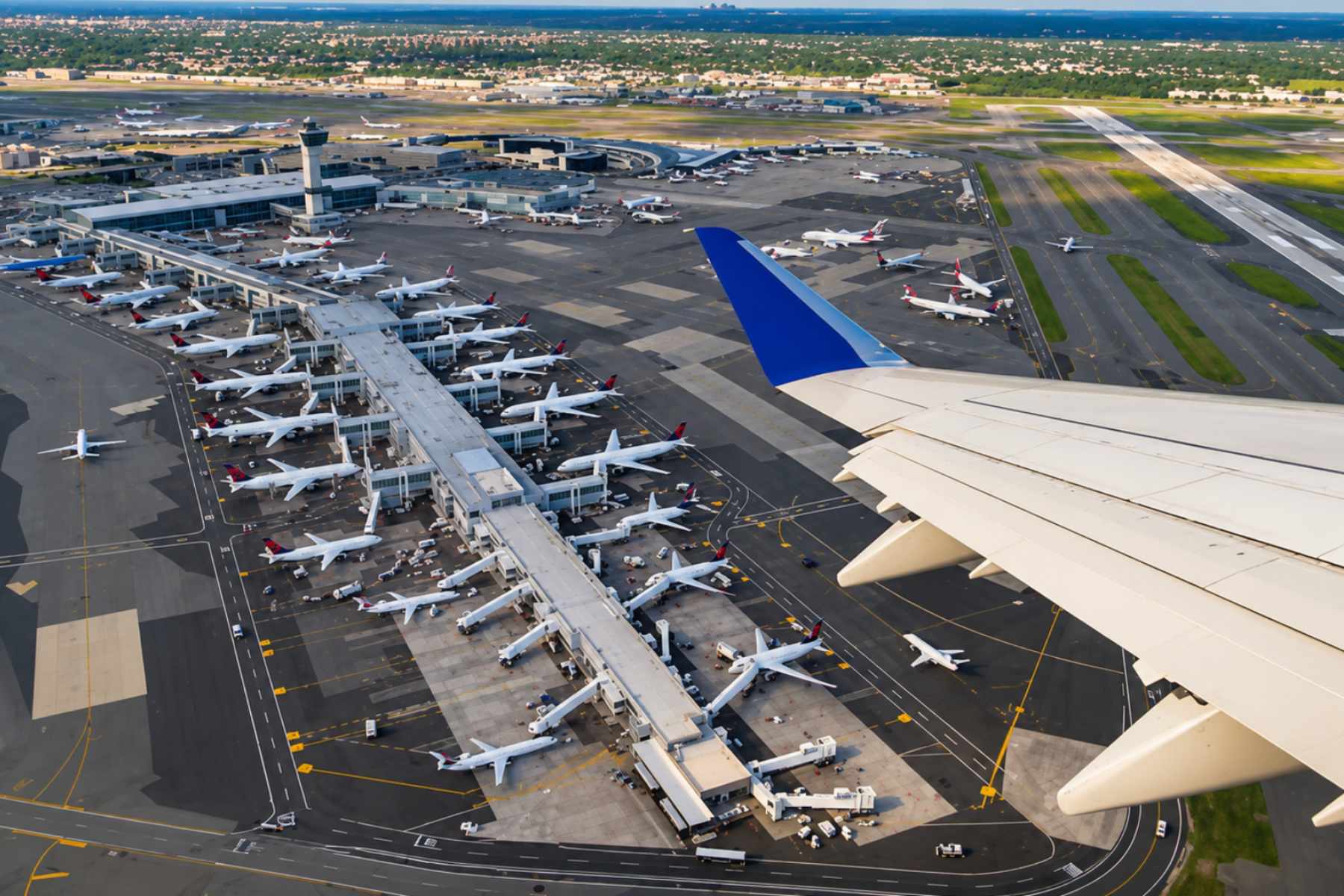

The skies are open again — but the travel nightmare is far from over.
The Federal Aviation Administration lifted its rare nationwide ground stop Friday night, ending a roughly four-hour shutdown that stranded thousands of passengers and sent airports across the country into chaos.
“The FAA Command Center nationwide ground stop has been cancelled,” the agency announced around 8:30 p.m. ET.
The extraordinary disruption began shortly before 4 p.m., when the FAA ordered departing aircraft to remain on the ground, citing safety concerns involving the nation’s air traffic control system.
Aging Technology Blamed
Transportation Secretary Sean Duffy blamed America’s aging aviation infrastructure.
“Our switches, our routers, actually got overloaded with data,” Duffy said, explaining that equipment began producing inconsistent information.
“It’s the old hardware that went down,” he added, noting that recently replaced switches continued functioning.
The communications failure affected air traffic control centers nationwide, forcing officials to halt departures.
No Evidence of Cyberattack
Homeland Security Secretary Markwayne Mullin sought to reassure Americans that the disruption was not another 9/11-style emergency.
“There was never any lives at risk. There was no flights at risk,” Mullin said.
Officials reported no initial evidence of a cyberattack, although investigators have not ruled out that possibility.
Thousands of Flights Disrupted
By 6:04 p.m., more than 10,400 flights had been delayed and nearly 2,000 canceled nationwide, according to FlightAware figures reported by ABC News.
At least 600 aircraft were diverted as stranded passengers scrambled for rental cars, trains and alternative flights.
Although the ground stop has been lifted, airlines face a massive backlog of delayed departures, displaced aircraft and stranded travelers.
Friday’s shutdown was just the third nationwide ground stop in recent history, following the Sept. 11 terrorist attacks in 2001 and a major FAA computer outage in January 2023.
With Thanksgiving approaching, the disruption raises fresh questions about the reliability of America’s aging aviation system.