



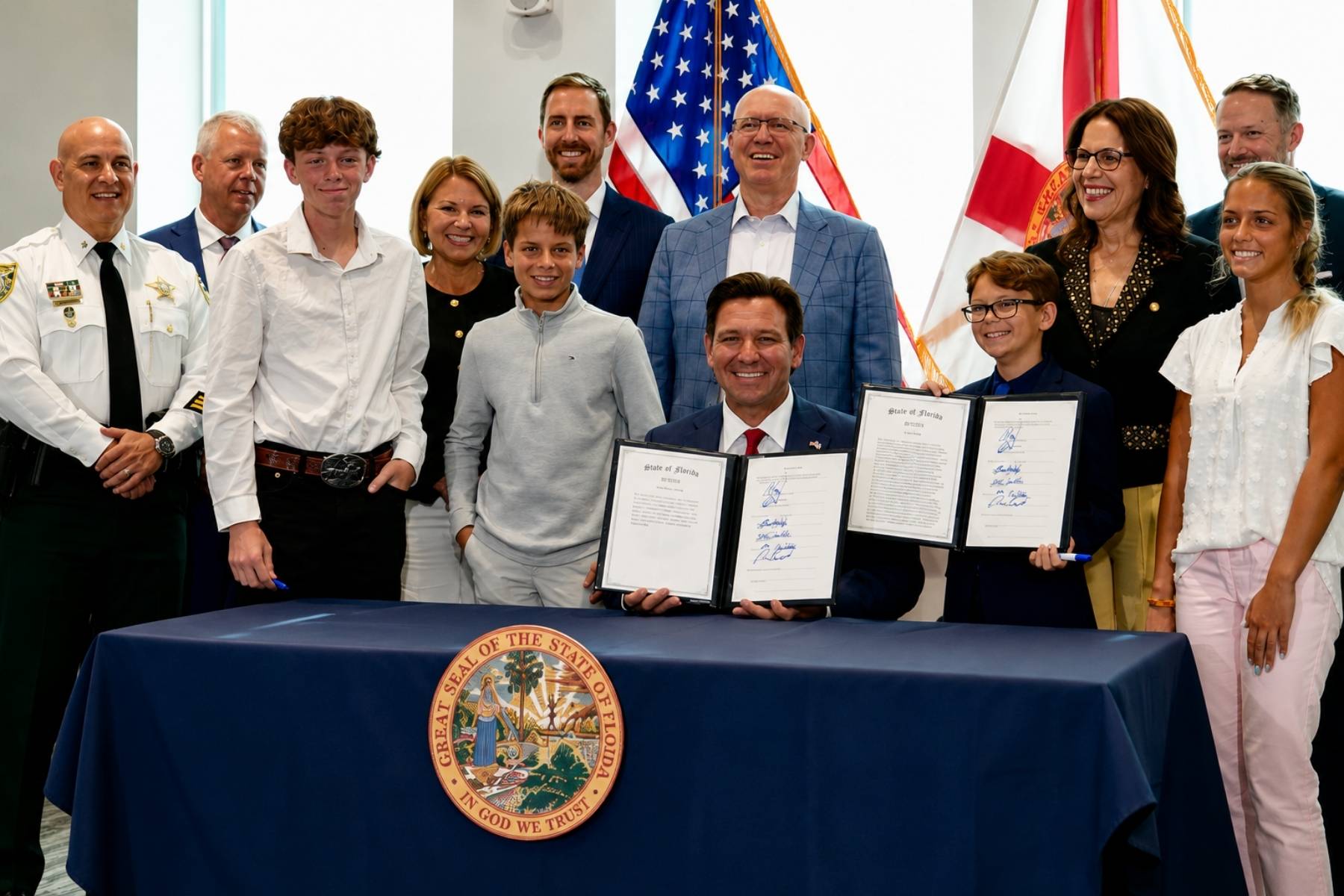

Gov. Ron DeSantis signed a $117.6 billion Florida budget Monday, casting the spending plan as a capstone to nearly eight years of conservative governance marked by tax cuts, reduced state spending and record reserves.
The budget, approved after nearly $810 million in line-item vetoes, marks the fourth consecutive year of declining state spending, according to the governor’s office. It also preserves major investments in education, transportation, public safety, environmental restoration and health care.
DeSantis said the plan reflects a governing philosophy centered on “fiscal responsibility and government that works,” arguing that Florida has reduced debt, built reserves and lowered taxes while continuing to fund core priorities.
The budget includes $30 billion for K-12 education, with per-student funding rising to $9,338, the highest level in state history. It also provides $1.56 billion for teacher and instructional personnel pay increases, $290 million for school safety and continued support for the state’s school choice programs.
Environmental spending remains a major focus, with $1.2 billion directed toward Everglades restoration and water quality projects. The administration says total Everglades and water quality investments under DeSantis now approach $9.5 billion.
The plan also includes $14.4 billion for transportation, $19.8 million in pay increases for sworn state law enforcement officers, $127.5 million for cancer research and continued funding for tax relief, including permanent back-to-school and disaster preparedness tax holidays.
DeSantis framed the budget as proof that Florida can cut spending while still expanding programs in areas he considers essential.
“This budget protects taxpayers’ interests, cuts spending for the fourth year in a row, and makes meaningful investments,” DeSantis said.
The spending plan now sets the financial course for Florida’s 2026-27 fiscal year.